

Expert Repair
Hoshizaki Refrigerator Repair Near Me in Boynton Beach, Palm Beach County, FL
Local Hoshizaki technicians near you in Boynton Beach, Palm Beach County — we diagnose and fix your Refrigerator fast, usually same day.
Mon–Sat 7am–8pm · Sun 9am–5pm
Schedule Your Repair
Service Type
What type of service do you need?
Or call us directly:
(786) 723-6874Refrigerator Brands We Repair





































Built for Miami — Homes, Condos & More
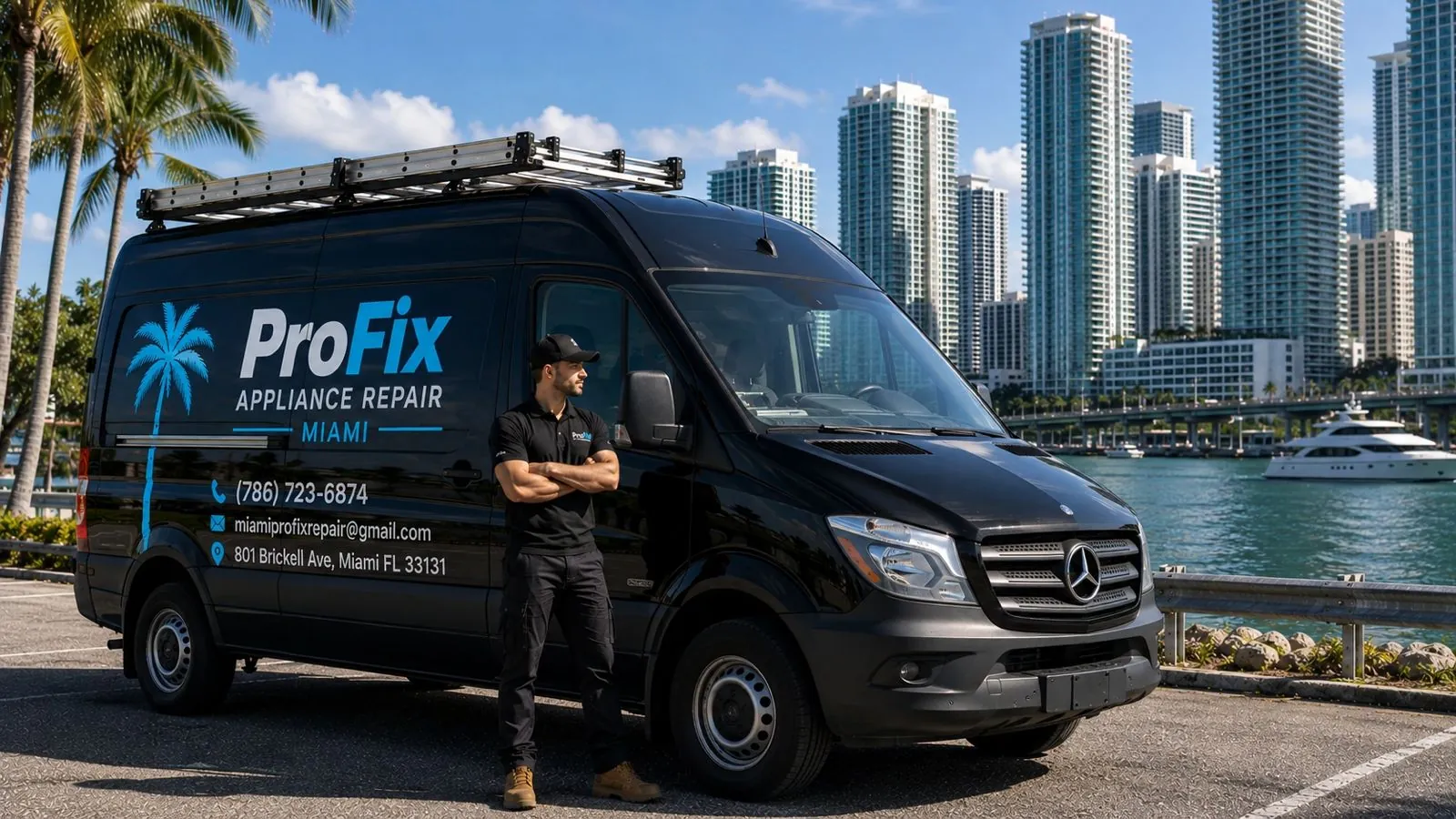
ProFix Appliance Repair Miami provides local Hoshizaki Refrigerator repair in Boynton Beach, FL. Our neighborhood technicians are factory-trained to service Hoshizaki appliances and carry genuine OEM parts to complete most repairs in a single visit. Whether your refrigerator needs attention or has another issue, we're already in your Boynton Beach neighborhood. We cover zip codes 33426, 33435, 33436, 33437 and all surrounding areas.
How It Works
Available Now · Miami, FL
Ready to schedule your repair?
ProFix Appliance Repair Miami — trusted by thousands of Miami homeowners. Same-day slots available.
About Hoshizaki Refrigerator Repair
Our Hoshizaki refrigerator work in Miami concentrates on condenser coils fouled by dust and pet hair and evaporator fan motors. Because ice machine performance is dominated by water quality, so filtration is usually the real fix, we diagnose this brand on its own terms rather than generically. The local factor that matters most is year-round heat and humidity, which pushes failures earlier than the 12-15 years typical life.
The diagnostic order matters more on this pairing than most. Because Hoshizaki builds around commercial ice machines, a refrigerator fault that looks familiar from other badges frequently has a different origin here. We read the architecture first and the symptom second, which is slower for about ten minutes and faster for the rest of the job.
A Hoshizaki refrigerator in Miami-Dade County works against conditions its design brief did not include: year-round heat and humidity, with salt air near the coast corroding electrical contacts and condenser fins faster than inland markets, with a supply of hard water drawn from the Biscayne Aquifer. Hurricane-season power interruptions drive a distinct spike in control-board failures, and sustained humidity keeps condensation faults present all year rather than seasonally. That combination is why local refrigerator failures cluster earlier than the 12-15 years service life would predict.
A Hoshizaki refrigerator is only as good as the space it was put into, and locally that space is often the constraint: Miami-Dade County is a mix of mid-century single-family stock and dense high-rise condo towers, where building access, loading-dock scheduling and hurricane shutters all affect service. Drain height, vent run, clearance and available circuit are set by the building, not the appliance. On top of that, hurricane shutters, condo-association service windows and loading-dock scheduling shape when and how a technician reaches the machine, which shapes how the visit is scheduled.
Parts reality for this pairing: commercial channel, good. Add that parts route through South Florida distribution, with hurricane-season demand spikes that lengthen control-board lead times specifically, and checking stock at model-number level before quoting stops being optional. If you do one preventive thing for a Hoshizaki refrigerator, make it this: clean the condenser coils annually and check the door seal with a banknote — if it pulls out without resistance the gasket is done. On the economics: the single most expensive domestic appliance to replace, which pushes the repair line much later than on any other machine
We cover Hoshizaki refrigerator repair across Brickell, Miami Beach, Coral Gables and Kendall and the rest of Miami-Dade County, with same-day availability on morning bookings and no distance surcharge inside the county. Every repair carries 90 days on parts and 30 on labour, and where the refrigerator is still under manufacturer warranty we will tell you so and point you at that route instead.
What Local Conditions Mean for Appliances in Boynton Beach
Near the ocean and the Intracoastal Waterway, salt is the main enemy of appliances. Airborne salt finds its way into garages, laundry closets and kitchens, where it corrodes condenser coils, wire connections and metal cabinets. Problems often appear first as intermittent faults: a dryer that sometimes refuses to start, or a refrigerator control that resets without warning. Closing garage doors, cleaning coils and having corroded connectors replaced early all slow the damage.
Farther inland, salt fades but humidity stays. Through the long South Florida summer, refrigerators and freezers in garages run nearly nonstop, condensation forms on cold surfaces, and front-load washers develop mildew around the door boot if they are not left open to dry. A clear dryer vent matters everywhere in the city, because moist air trapped in a laundry room adds to the load on both the dryer and the home's air conditioning.
Boynton Beach shares the region's exposure to summer lightning and to the hurricane season from June through November. Outages, brownouts and power surges are hard on the electronic controls and compressors in modern appliances. When a storm is on the way, pull the plugs; during the outage, keep the cold appliances shut; and once power returns, give it a few minutes before plugging back in. A whole-home surge protector adds another layer of defence.
Many residents of Boynton's western communities and coastal condominiums are seasonal, spending roughly November through April in Florida. Appliances that sit idle through the hot months can come back to life with problems: stale water in ice maker lines, dried seals in dishwashers, stuck water valves in washers and odours in refrigerators that were switched off with their doors shut. A careful first run, with an eye out for leaks, is wise on return.
Hard water is common across this part of Florida, so mineral scale builds up in dishwashers, ice makers and washing machines. Signs include a haze on glassware, an ice maker that lags behind demand and a washer slow to fill. Cleaning the dishwasher filter, using rinse aid and replacing refrigerator water filters on schedule are simple steps that slow the buildup and spare the valves and pumps from extra wear.
Common Hoshizaki Refrigerator Issues We Fix
Boynton Beach Zip Codes We Cover for Hoshizaki Refrigerator Repair
Other Refrigerator Brands in Boynton Beach